The Power of Trust: Why It Should Matter to All Leaders and How to Enhance It
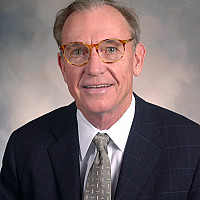
Pete Tosh
October 29,2025
1:00 PM EST
60 Minutes
Recorded Webinar
Being a trusting leader is challenging. Every leader’s interaction with any team member is a ‘moment of trust.’ So, leaders are constantly adding to or subtracting from their ‘trust accounts’ with each of their team members. And sometimes, the first step in building trust is to stop making withdrawals
Trust:
- Enhances organizational performance because it increases speed & decreases costs
- Without trust a team’s achievements take longer & cost more. So, a lack of trust is a significant business expense
Consider someone with whom you share a high degree of trust:
- How enjoyable is that relationship?
- How well do the two of you communicate?
- How quickly can the two of you accomplish tasks?
This webinar will address questions such as:
- What is trust, how does it work & how do you enhance it?
- What are the core leadership skills that build trust?
- Why is a leader’s success dependent on their ability to build trust with their team?
- How to quiet the voice of pride that is within all of us?
Areas Covered in the Session:-
I A Leader’s Influence Requires Employee Willingness
- There are a number of definitions of leadership. Google says thousands. But each of those definitions involves having influence.
- Leaders are set apart from their teams because of the inherent influence & power of their positions
- Leaders rely on their influence - the capability of having an effect on employee behavior to precipitate changes & improvements.
- Leaders are constantly utilizing their influence to achieve the behaviors & outcomes they desire.
- Having that influence & power sounds very appealing. But there is a hitch – a leader influencing an employee is not a passive process – it is grounded in human connection.
- Employees possess the capacity to delay, deflect, resist or ignore influence. So, a leader’s ability to influence employees’ behaviour is
- significantly dependent on those employees’ being willing to be influenced.
II Employee Trust is Based on Their Perceptions of Uncertainty & Vulnerability
- Interpersonal trust is our willingness to make ourselves vulnerable to another person when we are not sure how they will act. So, trusting someone involves our senses of:
- - What is the likelihood of my being harmed?
- Vulnerability - If I am harmed, how significant might the harm be; what is the worst-case scenario?
- Our perceptions of uncertainty & vulnerability combine to inform us of the risk involved & whether we should trust the person
- When we apply these two concepts to an employee - leader relationship today, it's easy to see that there is significant:
- - Today's business environment is changing more rapidly than ever
- - Leaders have significant influence over employees' merits, bonuses, advancement opportunities & job security
- So, employees are continuously forming perceptions of the uncertainty & vulnerability they are facing & then deciding whether to trust their leader
III Being Consistent as a Leader Builds Trust
- Surprisingly, when asked whether they prefer that their leader be strict or lenient, employees frequently say “neither.” They want to trust that their leader will display a predictable, consistent leadership style.
- Trust is a basic human need. When we trust a person, we:
- Have a sense of certainty about how they will act
Can be ourselves because we feel psychologically safe
Have confidence & faith in the person
And when trust is lost, it tends to destroy relationships.
IV Often Pride Goes Before a Leader’s Fall
- Pride is a vice that:
We dislike seeing in others
All of us have - but often prefer not to admit it
Can develop slowly within a leader without the leader realizing it
- Prideful leaders tend to:
Have a superior view of themselves with an exaggerated sense of importance
See success as being envied & recognized for their achievements
Expend energy trying to impress those around them
Assume they know all they need to know & have little interest in constructive feedback - arrogance puts blinders on us
- When leaders display prideful behavior, employees feel:
Inferior & put down
They are being treated as an audience to be impressed
Limited in opportunities to share their ideas
- Clearly, being prideful is not a way for a leader to engage a team.
V How Trust Impacts Your Organization’s Success
- Leaders universally agree that trusting relationships are a priority for their organizations.
- In PwC’s Trust Survey 91% of the business executives said their ability to build & maintain trust enhances their organization’s success – including the bottom line
- However, one of our challenges in developing a culture of trust is that surveys also show that 95% of leaders believe they are trustworthy. And when asked whether their leadership team gives appropriate attention to developing a culture of trust:
45% of business leaders agreed
But only 34% of employees agreed
- The Harvard Business Review says that trust is the foundation of most successful organizations & in those with high trust, employees have:
76% higher engagement
50% higher productivity
40% less burnout.
VI The Nine Trust-Building Leadership Attributes
- Exhibiting Competence & Capability
- Being Authentic, Transparent & Approachable
- Displaying Self-Awareness & Vulnerability
- Dropping Pretenses & Expert Authority
- Creating a Safe Culture That Encourages Employee Feedback
- Displaying Appreciation for Team Members
- Showing They are Less Self & More Others-Centered
- Exhibiting Humility & Confidence
- Behaving with Integrity & Moral Principles
VII Clear Messages from Leaders are Trusted Messages
- As humans, we are hardwired to desire & then gauge the degree of trust in our relationships
- Clear communication from leaders is very helpful in enhancing trust. One of the six-employee engagement needs most strongly correlated with improved business performance is for employees to know 'what is expected of them.'
- Being a trusted leader is definitely not an event - but a series of daily investments that pay off in numerous ways
- And the very good news is that trust-building skills can be learned & enhanced.
Background:-
There are various definitions of leadership, but they all involve having influence. And a trusting relationship is a necessity for ongoing influence. When we don’t trust someone, what they say has little if any influence on us. In fact, we often try to avoid even listening to them
Trust has a very significant & positive influence on all of our relationships. For many people, ‘Whether I trust you?’ is a more important question than ‘Whether I like you?'
Trust is the currency of relationships - impacting both current & future relationships. But trust does not happen by accident or flow automatically from good intentions. Leadership trust requires intentionality, consistency & fulfilling our promises
Employees want to be able to trust their leader. However, with some employees, possibly because of their experience with prior leaders, it takes significant effort to develop a trusting relationship
Why Should You Attend?
Most of us feel we understand the concept of trust. However, trust can be elusive because - we trust:
- Some people consistently – physicians, pharmacists, chefs & elevator repairmen
- Specific people more than others
- A person in some situations but not in other situations
- Depending on our prior experiences
And our trust decisions are influenced by our feelings and emotions – so they are not always rational.
Leaders need to be trusted in order to lead effectively. And, fortunately, leaders have multiple opportunities daily to create trusting relationships with team members – through both their words & behavior
Trusted leaders reap significant dividends. Trust builds closer working relationships, enhances employee engagement and amplifies the achievement of tasks. So, leaders should not underestimate the importance of making an investment in creating trusting relationships with team members. Trust is a strategic leadership skill.
Who Should Attend?
The ideal audience is: any supervisor, manager or executive – from frontline supervisor, HR to CEO - who leads, supervises, or manages employees.
Download the Order Form
Find More Human Resources Webinars
2 Hour Virtual Seminar On Handling and Documenting an Under-Performing Employee
Wage and Hour Laws: Ensuring Compliance with the Fair Labor Standards Act in 2025
Succession Planning for 2025: It’s Not Just for Emergencies – It’s a Leadership Development Strategy
How to Determine Reasonable Accommodations Under the ADA
The SECURE Act of 2025 – Payroll Implications & Compliance Strategies
Did you know that this online training is included in the 3-Month All Access Pass?
For just $209, you can register for this session alone — or upgrade to the 3-Month All Access Pass for $999 and give yourself and your entire team unlimited access to all 100+ online trainings 2025-2026!

Pete Tosh is the Founder of The Focus Group, a management consulting and training firm that assists organizations in sustaining profitable growth through four core disciplines:
- Implementing Strategic HR Initiatives
- Maximizing Leadership Effectiveness
- Strategic Planning
- Enhancing Customer Loyalty
The Focus Group has provided these consulting and training services to manufacturing and service organizations across the U.S., Canada, Europe, and the Middle East. Pete has worked closely with the leadership teams of organizations such as Exxon, Brinks, EMC, State Farm, Marriott, and N.C.I. YKK and Freddie Mac
Prior to founding his own firm 25 years ago, Pete had 15 years of experience — at the divisional and corporate levels — in Human Resource and Quality functions. Pete held leadership positions — including the V.P. of Human Resources and Quality — with Allied Signal, Imperial Chemical Industries, Reynolds Metals, Charter Medical, and Access Integrated Networks.
Pete holds a B.A. degree in Psychology from Emory and Henry College and Masters's degree in both Business Administration and Industrial Psychology from Virginia Commonwealth University. Pete is also co-author of Leading Your Organization to the Next Level: the Core Disciplines of Sustained Profitable Growth.